
AUTHOR: Eleonore Donnen
“I urgently need support to build a safe space with proper facilities for these vulnerable women and girls.”
Imrana Imdad
I had the opportunity to speak with Imrana Imdad, a clinical psychologist from Balochistan, Pakistan. She works actively with local organisations to support survivors of gender-based violence, people affected by conflict, and mental health issues. I met her in the context of her work as a Shelter City Fellow in Maastricht, the Netherlands. As a woman working in the field, she was able to highlight the emergencies she herself has witnessed.
Imrana spoke at length about her commitment and her childhood, which was marked by social inequality, particularly the lack of space for girls in public life. Her childhood experiences later strongly motivated her to study psychology in an attempt to better understand the invisible wounds left on women in her region, such as PTSD, anxiety and depression.
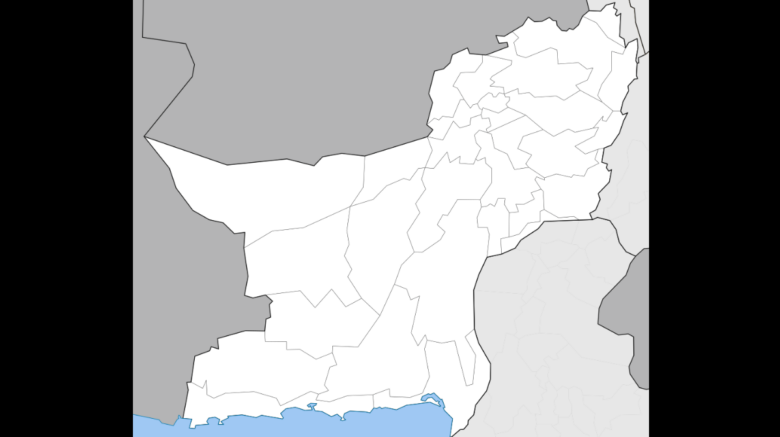
Her region, Balochistan, is one she describes as fractured between poverty and gender based violence, but she remains hopeful that she can help her region. Balochistan is one of the poorest and most affected provinces in Pakistan, with high exposure to political violence and the consequences of massive flooding that has forced the displacement of a large part of the population. According to Imrana, it is these intertwined factors that worsen women’s living conditions, with these disasters increasing forced marriages and the domestic abuse that follows. This violence then has repercussions on poor health and unmet psychological needs.
Imrana Imdad strongly emphasises mental health, which is being lost in an institutional vacuum. On the ground, she describes a clear deficit in mental health infrastructure, with a severe lack of specialised centres and far too limited access to medication and follow-up care. To compensate for this lack of institutions, she has set up listening groups, home visits and outdoor sessions offering emergency solutions that are often insufficient due to lack of funding.
In reality, despite such strong devotion, it seems difficult for Imrana to work in the field when faced with such profound psychological trauma in the population. These are not isolated experiences, but rather prolonged exposure to constant violence, as stated by Imrana. How can we combat this insecurity, which has such a profound and painful impact, yet remains largely unspoken? Imrana explores theories that domestic violence is an intergenerational reproduction of traumatic patterns. Children grow up as direct witnesses to physical and psychological abuse. It is this daily observation of violent and asymmetrical power relations that later perpetuates these cycles of violence. For Imrana, suffering is not limited to the individual but is part of a family dynamic that spans generations.
It is in this context that institutions have a role to play. Imrana’s work is hampered by constraints, because working in the field also means dealing with a lack of specialised infrastructure. Imrana offers emergency responses, but unfortunately, these remain insufficient in the long term given the scale of the needs. Imrana Imdad has a strong commitment. In her words and in her story, everything drives her to want to act fully and effectively, but in a system where violence is systemic, and silence reigns, her voice is like a whisper threading through a storm of iron.
Interviewing Imrana left a lasting impression on me, because of the knowledge she shared with me about her region, Balochistan, but also because of her relentless quest to find new mechanisms to help others.
Imrana Imdad, a committed psychologist who reminds us that dignity and healing should not be privileges but fundamental rights.
Source Picture:
https://commons.wikimedia.org/wiki/File:Locator_map_Balochistan_Pakistan.svg
