AUTHOR: Sara B. Gero
Coltan is an essential material for renewable technologies, however, the mining industry behind them is linked to human rights abuses, including war crimes committed by armed groups, and land conflict. Currently, there are over 100 armed groups operating in the DRC, most of them smaller, local militias who attempt to protect their own communities after decades of war and unrest.
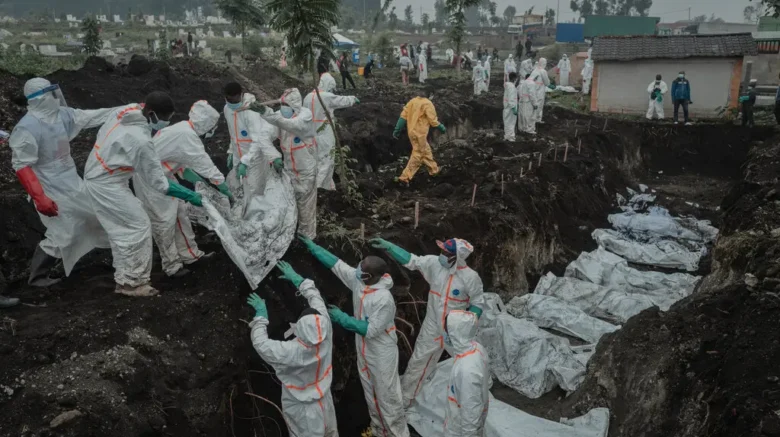
Large amounts of Coltan can be found in the DRC, especially in areas bordering Rwanda, such as Goma. There are two main armed groups working in the region, the M23, which is backed by Rwanda, and Wazalendo, which is a loose coalition of various armed groups backed by the Congolese army. The conflict between these two groups partially arises from the mining opportunities in the area. According to a recent report from Amnesty International, both of these groups are committing war crimes, including sexual abuse, attacks on healthcare infrastructure, and crimes against civil society. The recent report by Amnesty International focuses on the city of Goma, where large Coltan mines are located.
The Goma Massacre
The massacre at the city of Goma, Eastern DRC, in August 2023 is a clear example of a war crime, perpetrated by the national army. Followers of the Natural Messianic Judaic Faith Towards the Nations – the Power of Word (FNJMN) had demanded the UN Mission for the Stabilization of the DRC (MONUSCO) to leave the country. This resulted in a violent clash between the authorities and the protesters on the 30 of August. On this day, a commando unit raided the FNJMN radio, and arrested 12 people. They escorted them to the street, where other followers of FNJMN had started gathering after hearing about the raid, and opened fire on the people. 6 people died immediately, and at least another 10 were injured. Nearby, a police patrol shot at FNJMN followers who were headed to the radio station, killing another person. All of this happened in the first hours of the day.
At 7 in the morning, hundreds of FNJMN followers gathered on a street near their temple. For about half an hour, two military officers tried to persuade the group to halt their march. At around 7.30am, the soldiers opened fire, under instruction from their commanding officer. The death toll is uncertain and varies from 56 to above a 100 people killed. According to an Amnesty report, officers stayed in the area for hours, cleaning puddles of blood and body parts and arresting FNJMN followers, bystanders and residents. Before leaving the area, they looted the temple and burned it down.
War Crimes Committed by Armed Militias
War crimes perpetrated by the State and its officials are not the only ones that the people of Eastern Congo face regularly. Both M23 and Wazalendo groups have been tied to multiple war crimes in a recent Amnesty report. Médecins Sans Frontières noted that between January and April 2025, it treated nearly 7,400 new victims and survivors of sexual violence in and around Goma. Gang rapes perpetrated both by M23 and Wazalendo soldiers have been well documented by Amnesty International. Most often these crimes are committed because the victims are perceived to be supporters of the opposite group.
M23 has also been linked to summary killings, execution without trial, and it is suspected that they have perpetrated 5 of such incidents in the first months of 2025. However, these are often committed people in plain clothing and at night, which makes it difficult to determine who committed these crimes. However, in all 5 of these cases M23 uniformed M23 fighters were seen close to the scene, and were directly involved in 3 of these murders.
Furthermore, M23 fighters raided hospitals in Goma six separate times between 28 February and 19 May abducting or detaining patients and caregivers. On at least three occasions, M23 fired their weapons near or inside hospitals in Goma. There is no mention of Wazalendo groups doing the same in the Amnesty report on war crimes in Eastern DRC. However, it is important to note that as of late January, M23 has taken over control in Goma, and the exact situation of Wazalendo or other military groups in the area is largely unknown since then.
The connection between war crimes and human rights abuses and green technology minerals is undeniable. International tech and mining companies reap the benefits of these minerals without acknowledging the issues that they are perpetrating in the Democratic Republic of Congo. The growing demand for green technologies does not justify this lack of due diligence in regards to the companies’ supply chains and human rights.
Sources:
https://www.amnesty.org/en/documents/afr62/0145/2025/en/
Source picture:
https://www.nytimes.com/2025/02/05/world/africa/congo-m23-rwanda-goma-burials.html