
AUTHOR: Kenza S.
Why is Climate Change an Issue?
Climate Change impacts our lives in many different ways that we might not be aware of. Currently, the level of global warming is above pre-industrial levels. This is worrying, because the long-promised efforts by the international community to ensure green growth, sustainable development and eradicate poverty have been unsuccessful. We are increasingly witnessing unprecedented, devastating climate events, such as heatwaves, wildfires, extreme rainfall and even severe drought, just to name a few. Moreover, the climate emergency is first of all a human rights crisis. It entails not only civil, political, economic, social, and cultural rights’ implications for the present generation, but also for the future of humankind. This raises several questions as to why global responses have largely failed. This blog article reviews the authoritarian challenge to climate action and some of the recent missed opportunities.
Three Authoritarian Tactics, One Goal: Slow Down Solutions for Climate Change
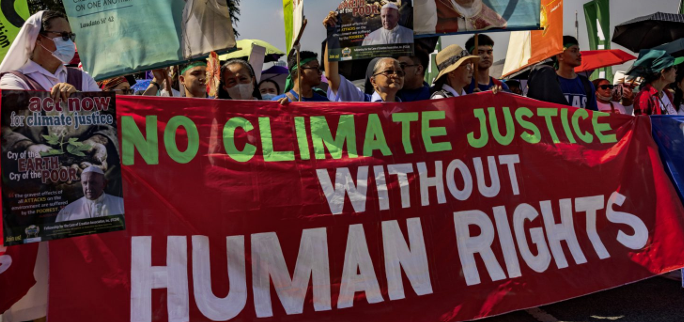
The world’s shift to authoritarian power practices has made it difficult to address the climate crisis effectively. As noted by Dr Marta Schaaf and Nazia Erum, many countries have expanded their use of fossil fuel sources, aggressively attacked environmental experts, and disrupted social cohesion. This is the result of three core tactics. The first is to suppress the truth through disinformation, by presenting claims of global warming as exaggerated, false and discrediting the credibility of the scientific knowledge on climate change. The second is to foster fossil fuel dependency in the world, by exploiting global economic interdependence and diplomacy. For instance, President Donald Trump has recently attempted to undermine corporate sustainability legislation in the European Union through lobbying efforts. The third, and last authoritarian strategy, is to intentionally create social divisions, hampering people’s ability to ensure that the climate crisis is prioritized in the political agenda by organizing peaceful climate mobilisations. In this sense, many governments are, for example, rewriting laws to make the right of protest risky and costly. With the international human rights system being under attack from authoritarianism, climate justice is clearly in danger. Despite all of this, we strongly believe that the power of change lies with the people.
“When rights defenders and communities organise, expose facts and litigate, they can shift trajectories”
Amnesty International
Bonn 2025: A chance Missed
Despite the increased authoritarian practices around the world, it is not too late for political leaders to take effective climate measures to save the planet and ensure the respect for the rights of current and future generations. The Bonn Climate Conference, held between 16-26 June 2025, was a key preparatory meeting for the annual UN Climate Conference. It also represented an opportunity to spotlight the situation in COP29 host Azerbaijan, where human rights journalists and defenders have been jailed for reporting on environmental issues. Yet, many could not attend the conference because of limited badges and visa problems, especially Indigenous peoples and journalists from lower-income countries.
“The voices, views, knowledge, and wisdom of Indigenous Peoples, frontline and fence line communities and human rights defenders must be incorporated into climate policies, plans and action”
Ann Harrison, Amnesty International’s Climate Justice Advisor
Santa Marta Conference 2026: Another Missed Opportunity
Held from 24 to 29 April 2026, the Santa Marta Conference took place as a response to the global energy crisis fuelled by armed conflicts across the world and the deadlock within the United Nations, which has failed for three decades to confront the root causes of the climate crisis and its implications for human rights.
“ Santa Marta showed there is political appetite for states to defossilize the global economy and embark in just transitions, but that momentum must now translate into concrete action rooted in human rights”
Candy Ofime, Amnesty International’s
researcher and legal advisor on Climate Justice
The discussions were organized around three thematic pillars: overcoming dependence on fossil fuels, ensuring economic growth, and advancing international climate cooperation. During the conference, Indigenous Peoples, frontline communities and social movements presented a People’s Declaration through which they called for justice, equity, and accountability in the transition away from fossil fuels. While a step forward was certainly made at this conference, the creation of a new international scientific panel intended to advise on the global energy transition lacked several epistemologies, especially indigenous and traditional knowledge systems.
What can you do right now?
You can support our call for governments and international organizations to:
● invest in just and human rights centered transition to renewable energy
● protect environmental defenders and journalists who are being harassed and jailed for reporting on climate issues
● counter disinformation on climate change
● ensure inclusive participation in international climate conferences, particularly for Indigenous peoples and those who come from lower-income countries
● keep public space open by ensuring that laws that criminalize peaceful climate mobilisations are not passed, and where they exist, are repealed
Reference List
Amnesty International. (2026, April 30). Authoritarianism is supercharging the climate crisis. https://www.amnesty.org/en/latest/news/2026/05/authoritarianism-is-supercharging-the-climate-crisis/
Amnesty International USA. (2026, https://www.amnestyusa.org/issues/climate-justice/devastating March 2020). Climate justice.
Amnesty International. (2025, June 16). Global: Urgent action needed as climate crisis leads to new harms to human rights. https://www.amnesty.org/en/latest/news/2025/06/global-urgent-action-needed-as climate-crisis-leads-to-devastating-new-harms-to-human-rights/
Amnesty International. (2026, April 29). Santa Marta conference unlocks historic political momentum for just transitions that must translate into rights-centric action. https://www.amnesty.org/en/latest/news/2026/04/santa-marta-conference/
Amnesty International. (2026, April 9). A UN climate change resolution that may shift climate accountability for decades. https://www.amnesty.org/en/latest/campaigns/2026/04/a-un-climate-change-resolution-that-may-shift-climate-accountability-for-decades/