AUTHOR: Lorena Hutanu
In South Korea, abortion is no longer a crime punished by law, but it is not clearly legal either. Seven years after the Constitutional Court put down the ban on abortion, there has been no new law telling pregnant people, doctors, or even judges what is actually allowed. This is not the only gap in women’s protection. Survivors of digital sex crimes still struggle to get non consensual and abusive content removed and to receive proper protection. These rights should be upheld, but in practice, laws and legal protection are missing.
A Ruling but no Law
In 2019, the Constitutional Court ruled that South Korea’s ban on abortion was unconstitutional and requested that the National Assembly amends the law by the end of 2020. However, this deadline passed a long time ago already. While abortion has been decriminalized, the National Assembly failed to enact a new regulatory framework, and the Mother and Child Health Act has not been amended either. Amnesty International warns that this lack of a new regulatory framework directly creates a legal vacuum that puts pregnant people in a dangerous situation. This legal vacuum puts up barriers to accessing vital health care but also leaves pregnant people with unclear legal protection which could sadly push them towards more exploitative and unregulated medical practices and in some cases leave them with no access to care at all. This constitutes a clear lack of respect for human rights due to people’s inability to properly exercise their reproductive autonomy or get access to needed medical services.
Furthermore, South Korea’s delay in addressing this need/situation has not gone unnoticed internationally. In 2023, the UN Human Rights Committee expressed their concern regarding the lack of legislative response to the 2019 ruling and emphasized their regret at the delay in reviewing the safety and the efficacy of abortion pills. This urged South Korea to start adopting legislation protecting access to safe and legal abortion methods, such as introducing medical abortion pills and ensuring health insurance coverage for abortion, access to contraception and other reproductive health services.
When Legal Uncertainty Blurs The Line
Regrettably, these changes only happened in July 2026, seven years after the initial ruling of the Constitutional Court. This also happened before a very mediatized case where a woman who had a late-term abortion in 2024 was charged with murder after she shared an experience online. This led to the medical staff realizing the procedure to also be convicted. The Ministry of Health and Welfare called for severe punishment of all parties involved, leading to her conviction in March. However, she was acquitted in July, but the convictions of the medical staff were upheld with reduced sentences. Amnesty International Korea highlights the structural loopholes in access to essential healthcare. Without clear rules, pregnant people and doctors can end up criminally penalized for what should be considered essential healthcare and a human right, never a crime.
Promises but no Concrete Plan
Actions have been taken regrettably slow. In July 2025, seven years after the initial proposed legislation to decriminalize abortion, provide national health insurance coverage and make abortion pills publicly accessible, the National Assembly passed a bill. A month later, the National Policy Planning Committee established a five-year priority list including public access to abortion pills. There is still no concrete roadmap. As of July 2026 there are still no new regulations enacted by the Assembly. Priorities and proposals are not laws, and after all this time, they are insufficient.
When Survivors Face Big Tech
A similar pattern appears online. In March 2020, journalists uncovered the existence of eight secret chatrooms on the app Telegram. In these chatrooms, thousands of videos of women and girls were being sold using cryptocurrency, without their consent or knowledge that these videos existed and were being shared. These videos depicted explicit non-consensual sexual content and the Korean police said that more than 60,000 people entered these rooms. This case became known as the ”Nth Room” case.
In October 2021, one of the operators of the chatrooms was sentenced to 42 years in prison, yet digital crimes have continued on rising. This is particularly concerning since they cause additional harm because the content can be shared and redistributed easily. Recently, criminal cases show that perpetrators threaten survivors with existing videos to push and force them into creating new content for them, meaning that survivors are still at risk even when the original perpetrator is punished.
Deleting this content and stopping its spread online is essential in restoring survivors’ daily lives. They have no choice but to ask tech companies to remove it. However, this means that the survivors have to repeatedly search for and collect their own non-consensual content to be able to report them. If these requests are not processed quickly enough, the content can get redistributed before it gets deleted and continues to harm survivors.
Both survivors and activists have told Amnesty International that Google’s reporting categories, procedures and guidelines are very confusing and difficult to follow. After a complaint is submitted, there is no communication on the progress for months on end. In a survey of 25 survivors conducted by Amnesty International, 11 of them had made complaints through Google and all of them found it difficult to navigate and confirm the outcome. One survivor had to wait over a year to be told what the outcome of her request was. Google’s inadequate support and reporting system makes it harder for survivors to protect themselves. This process is particularly triggering for the survivors, some forms require photo ID, even though the last thing they want to do is share a picture of them linked to their trauma. Shockingly, part of the guidelines mention that if the report is wrongly filled or untrue, then the person reporting will be punished for it, making survivors fear reporting or creating months-long anxiety regarding the outcome.
Even though Google and other companies have a lot of advantages when it comes to sharing content online, to these women it is also a distribution website that perpetuates secondary victimization. The perpetrators can upload videos easily, but to get them removed it takes months before they are removed.
The responsibilities of companies in respecting human rights are articulated in the UN Guiding Principles on Business and Human Rights, which states that all business enterprises must avoid causing or contributing to human rights failings through their activities and make sure to properly address them when they occur.
What Needs to Change
Amnesty International has made it clear that the government must amend the Mother and Child Act, remove barriers to safe abortion and introduce proper regulations of abortion services. Women’s sexual and reproductive health and rights need to be central. The Human Rights Committee has, additionally, asked for better access to abortion pills and their insurance coverage.
While South Korea adopted some legislative reforms to address AI-generated “deepfakes” content, such as an amendment to the Sexual Violence Prevention and Victims Protection Act. The reforms provided better resources to national authorities and facilitated the removal of content that perpetuates gender-based violence. The content can range from recordings to the victim’s personal information. However, technology-facilitated gender-based violence remains a significant challenge, and platform accountability is limited, leading to inadequate remedies for survivors.
In December 2022, Amnesty International launched a global petition asking Google to address its current flaws in its reporting system. Google must do more to prevent the spread of online non-consensual video or online gender-based violence, not just in Korea but globally. This issue extends beyond Korea. Survivors around the world face the same issues and need a better reporting system
Sources:
Amnesty International. (2026, April). Human rights in South Korea. https://www.amnesty.org/en/location/asia-and-the-pacific/east-asia/south-korea/report-korea-republic-of/
Amnesty International. (2022, December 16). South Korea: Online sexual abuse content proliferates as survivors blame Google failings. https://www.amnesty.org/en/latest/news/2022/12/south-korea-online-sexual-abuse-content-proliferates-as-survivors-blame-google-failings/
Amnesty International. (2025, May 28). Beyond Political crisis: Building a Rights-Based Future in South Korea. https://www.amnesty.org/en/latest/news/2025/05/beyond-political-crisis-building-a-rights-based-future-in-south-korea/
Amnesty International. (2026a, March 4). South Korea: Conviction of woman seeking abortion exposes government failure to guarantee access to vital healthcare. https://www.amnesty.org/en/latest/news/2026/03/south-korea-conviction-of-woman-seeking-abortion-exposes-government-failure-to-guarantee-access-to-vital-healthcare/
Amnesty International. (2026b, July 24). South Korea: Appeal decision for abortion case exposes legal vacuum. https://www.amnesty.org/en/latest/news/2026/07/south-korea-appeal-decision-for-abortion-case-exposes-legal-vacuum/
UN. Human Rights Committee (139th sess. : 2023 : Geneva. (2023, November 24). Concluding observations on the 5th periodic report of the Republic of Korea : Human Rights Committee. UN,. United Nations Digital Library System. https://digitallibrary.un.org/record/4028052
Source Image:
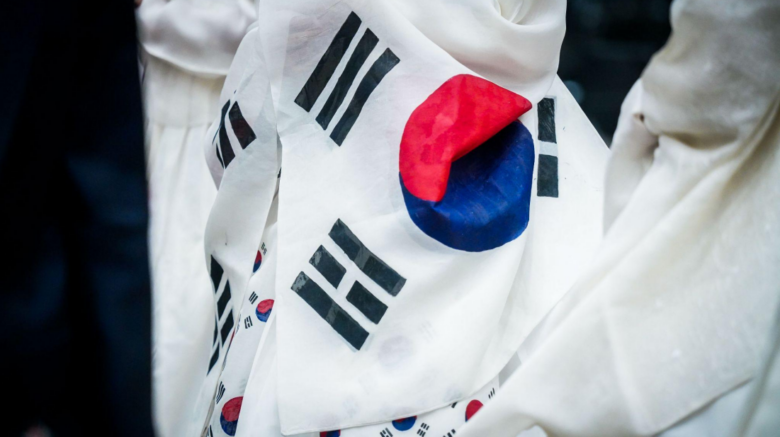
준섭 윤. (2022, August 22). Wrinkled South Korean flag · free stock photo. Pexels. https://www.pexels.com/photo/wrinkled-south-korean-flag-13306495/