AUTHOR: Elisa Zúñiga Park
In September of 2025, Cristina Fallarás, Spanish feminist writer and journalist, holder of
prizes such as the Prize of Good Practices of Non-sexist Communication (Premio Buenas
Prácticas de Comunicación No Sexista) or the Prize of Feminist Journalism (Premio de
Periodismo Feminista), was targeted and persecuted by far-right Spanish political party
VOX. The party made Fallarás their focus on all social media platforms and created a
website encouraging their voters to report her, fueling a coordinated hate campaign against
the journalist. The campaign was triggered by an opinion column Fallarás wrote titled Don’t
deal with fascist, don’t deal with racist (No trates con fascistas, no trates con racistas).
However, this pattern is not new for her —who had already endured death threats, verbal
abuse, bullying and physical violence for more than a decade— nor is it new for the rest of
us.
Every year, when International Women’s Day approaches, debates over whether the day
should even exist expand across social media. Millions of women who post about it on
online platforms are met with hateful comments and attempts to silence them. Mocking
memes, derogatory portrayals and misogynist statements flood the internet with one clear
objective: to silence the feminist activist. The platforms may be new, but the urge to
suppress certain perspectives is not.
Digital Violence or Women Violence?
Digital violence is often dismissed as the lesser cousin of its physical counterpart; intangible,
avoidable and easier to scroll past. Yet Amnesty International defines it with unsettling
clarity: it’s a threat to human rights.
In the digital era, our online identities and interactions constitute a significant part of who we
are, what we stand for and how we participate in society. Today, many people’s first
encounter with news, political debate and public discussion is through online spaces. As a
result, refraining from having a somewhat political digital life or presence is increasingly
difficult. It seems like “doing politics” involves intrinsically a digital aspect; to express our
opinion publicly means to do so on the online spaces.
Ironically, under the banner of freedom of speech, companies such as Twitter have
weakened some of the regulations designed to prevent hate speech from coming forward.
These decisions come often justified by appeals to their and their country’s belief of the
importance of freedom of speech. However, it seems that this discourse of freedom of
speech around online spaces does not cover or protect the women and other minorities that
are publicly harassed and violated for expressing their views, as is the case of Fallarás.
Amnesty International has repeatedly called on the platform to strengthen its policies,
publishing a report in 2020 of Twitter’s progress in addressing violence and abuse against
women online. This report followed the 2017 boycott campaigns launched by women
worldwide who felt the platform had failed to protect them. Currently, 38% of women have
been victims of some sort of digital violence, including verbal abuse, harassment, doxxing
and misinformation, and the number still increases. Witnessing or experiencing this abuse
has a direct effect on whether and how women choose to express their opinion online.
Research by Amnesty International revealed declarations from women admitting to
self-censoring themselves as a reaction to the experienced online abuse. When public digital
spaces are not safe for every member, they cease to be truly public and instead become
male-centered and male-dominated spaces.
On Protecting Human Rights for All Human, Not Just Some
The Universal Declaration of Human Rights recognises freedom of expression as a
fundamental human right. Democratic nations across the world pride themselves in the
recognition and defense of this principle. Conservative parties, narratives and ideologies
rapidly reference and invoke this right when accused of harmful rhetoric. Yet when looking at
the facts and the trends of the reality, the same voices remain silenced.
In recent years, online spaces have risen as fundamental to exercise freedom of expression
and accessing information. However, as discrimination and violence have migrated to the
digital world, many women are withdrawing from participating in these spaces. Amnesty
International stands and defends the right of freedom of expression, the right to participate in
public life and the right to security and dignity. In doing so, the online sphere requires
protection and regulations. If left unattended, this sphere remains once again only
occupiable by the same parties that defend their freedom of speech through stripping it away
from others. Our responsibility is to prevent that outcome, and to give back the space to
women and other minorities to talk, express and “do politics”.
Sources:
Amnesty International. (2017, November 20). What is online violence and abuse against
women?
https://www.amnesty.org/en/latest/campaigns/2017/11/what-is-online-violence-and-abuse-ag
ainst-women/
Amnesty International. (2020, September 22). Twitter’s scorecard: Tracking Twitter’s
progress in addressing violence and abuse against women online (Index No. AMR
51/2993/2020). https://www.amnesty.org/en/documents/amr51/2993/2020/en/
Amnesty International. (2017, November 20). Amnesty reveals alarming impact of online
abuse against women.
https://www.amnesty.org/en/latest/press-release/2017/11/amnesty-reveals-alarming-impact-o
f-online-abuse-against-women/
United Nations. (1948, December 10). Universal Declaration of Human Rights.
https://www.un.org/en/about-us/universal-declaration-of-human-rights
Source Image:
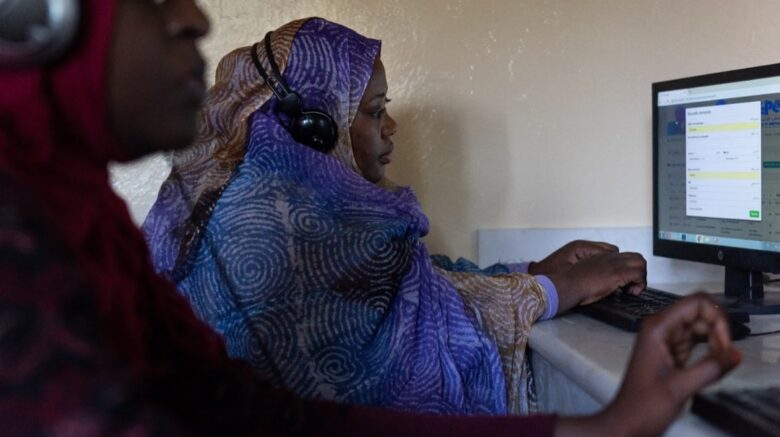
United Nations Development Programme. (2025, November 25). Unite to end digital violence
against all women and girls.
https://www.undp.org/stories/unite-end-digital-violence-against-all-women-and-girls