AUTHOR: Beverly Mtui
There comes a time when every era utters the words “power to the youth” and pours all of
their hopes into young people, the next generation, to undo the world’s wrongdoings. However, what happens when young people really do take matters into their own hands and demand change?
In recent years, we have seen the emergence of the so-called “Gen Z protests”, referring to Generation Z born between the late 1990s and the early 2010s. In these protests, young people across the world are joining forces, going out on the streets and mobilising for their rights. Youth organisation and mobilisation are certainly not something new, and presumably every era has been in some way or another shaped by youth movements. However, just as these movements of the past faced implications and hardships on the sole basis of advocating for change and demanding their rights, so do the current Gen Z protests, of which many are met with repression. From unlawful force being used against them to confrontations with the police, various tactics are employed to intimidate and oppress young protesters, according to young activists in Madagascar, Indonesia and Peru (Amnesty International, 2025a).
But what exactly happens at these protests, in which young people are simply protesting against political grievances? In this article, we are focusing on the Gen Z protests in Kenya and Nepal.
Kenya
Between June and July 2024 and July 2025, widespread anti-government protests took place across Kenya as a response to tax reforms and other austerity measures. These protests were led primarily by Kenyan youth and young people, who used social media platforms and the hashtag #RejectFinanceBill and the severe implications of certain governmental decisions.
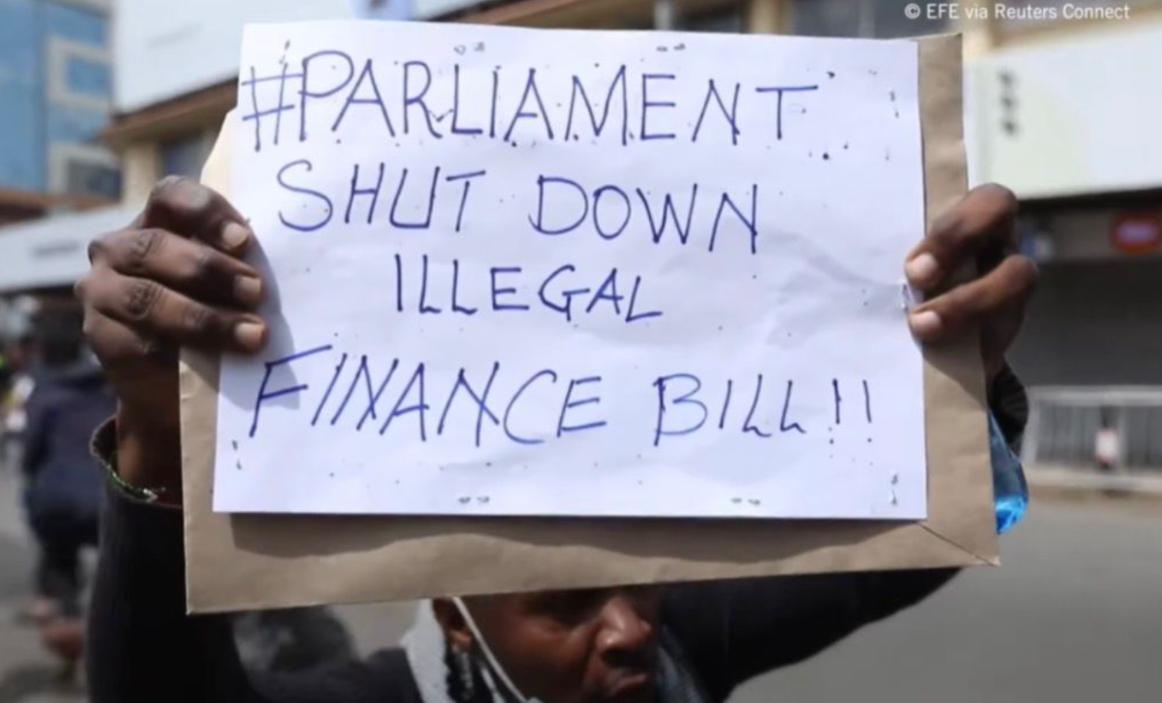
Yet, they were met with violent crackdowns, which resulted in “at least 128 deaths, 3,000 arrests and over 83 enforced disappearances” (Amnesty International, 2025b). Besides physical repression, Amnesty International (2025b) also found that Kenyan authorities exerted tech-facilitated violence against young activists, including online intimidation and harassment, smear campaigns and surveillance, which were in some cases used to “justify arrests, enforced disappearances and killings of notable protest organizers”. In their report on tech-facilitated violence against young activists in Kenya, Amnes International (2025c) highlights how online harassment and smear campaigns were used as tools to censor, silence and discredit those being critical of the government and authorities, which subsequently led to the crackdown on mobilisation and demonstration. Consequently, this violence did not remain online. As the report further states:
“The violence these young activists face online is intricately linked with experiences
of gender-based violence offline, including testimonies of physical and sexual abuse by police
officers. It is further endangering marginalized young people online and offline and stripping
them of their rights to privacy, freedom of expression and peaceful assembly.” (Amnesty
International, 2025c, p. 62)
Therefore, if governments compromise and actively suppress freedom of expression and peaceful assembly through both online and offline tactics, they set a dangerous precedent. They legitimise the removal of spaces and voices that stand up against injustices and human rights violations.
Nepal
In September 2025, youth-led protests
across Nepal were triggered by government restrictions on social media. In an already contentious atmosphere in which “public discontent against corruption and mounting economic disparity” grew, the social media impositions further exacerbated the tension (Amnesty International, 2025d, p. 4)
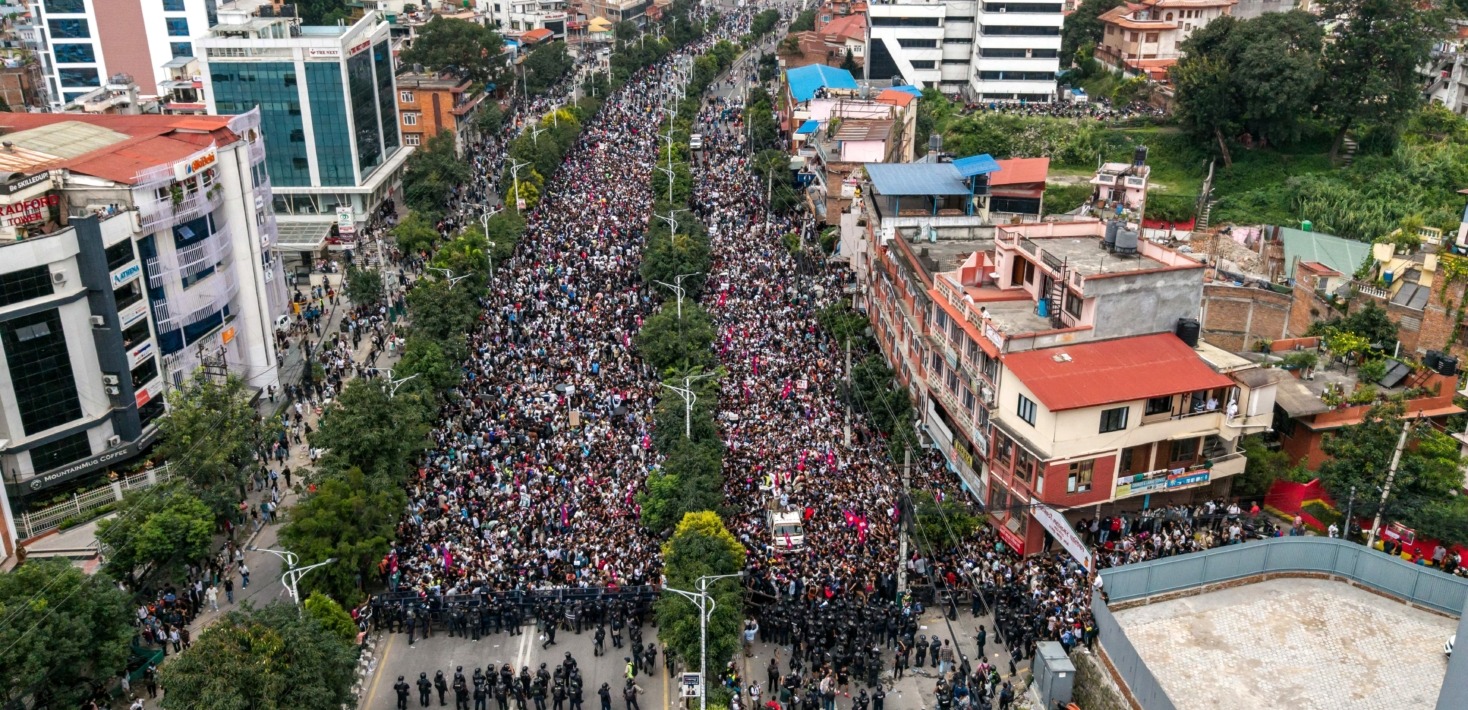
According to Amnesty International (2025d), while the protests themselves were largely peaceful, at least 76 people were killed, and more than 2,000 people were injured during the two days of protests and the subsequent four days of unrest. The violent crackdowns were described as a “rapid escalation of unlawful force” (Amnesty International, 2025d, p. 8). Security forces started with the use of water cannons, tear gas grenades and rubber bullets, and eventually fired live ammunition into crowds, leaving numerous peaceful protesters and bystanders, including children and journalists, severely wounded in the head, neck and chest (Amnesty International, 2025d, 2025e). Amnesty International (2025e) points out that these actions transpired due to systemic failures in policing of protests and use of force, including
● “the failure to exhaust non-violent means before resorting to force;
● the dangerous and unlawful use of less-lethal weapons;
● poor planning, preparation and training for policing of protests;
● unnecessary and unlawful use of lethal force in situations with no imminent threat of serious injuries or to life.”
In their briefing on Nepal’s crackdown on protestors, Amnesty International (2025d) concludes:
“This represents a serious failure of Nepal’s policing system and a profound disregard
for human life. The deliberate or reckless use of live ammunition, rubber bullets, water
cannon and tear gas against largely peaceful demonstrators cannot be justified under any
circumstance. These acts not only violated international law but also Nepal’s own
constitutional guarantees of life, dignity, and peaceful assembly.” (Amnesty International,
2025d, p. 26)
The disruption of peaceful protests is already detrimental in itself. However, when protesters are also subjected to violence and are seemingly forced to risk their lives to exercise their rights and demand change, then their voices will not only be silenced but completely erased, so that those in power can remain unchallenged and unaccountable.
Gen Z exemplify the right to youth-led mobilisation
Evidently, Gen Z protests continue to unfold worldwide. Attempts to intimidate, suppress and even violate youth movements through the use of force, both online and offline, as seen with the youth-led protests in Kenya and Nepal, are widespread. The answer to what happens when young people really do take matters into their own hands and demand change is that, unfortunately, there are cases around the globe in which they are met with repression and violence. However, they cannot be simply silenced or erased, as the rights to peaceful assembly and freedom of expression are enshrined in international human rights law. Therefore, Gen Z protests are a matter of human rights that deserve protection, accountability, and justice. The world’s wrongdoings cannot be undone if those tackling them are wronged as well. This applies not only to today’s youth protesters and activists, but to all human rights defenders across generations and across the globe.
References:
Amnesty International. (2025a). The Gen-Z Movement: This is why we’re risking our
lives to protest.
https://www.amnesty.org/en/latest/campaigns/2025/10/the-gen-z-movement-this-is-w
hy-were-risking-our-lives-to-protest/
Amnesty International. (2025b). Kenya: Authorities weaponized social media and
digital tools to suppress Gen Z protests.
https://www.amnesty.org/en/latest/news/2025/11/kenyan-weaponized-social-media-an
d-digital-tools-to-suppress-gen-z-protests/
Amnesty International. (2025c). “This fear, everyone is feeling it”: Tech-facilitated
violence against young activists in Kenya. Amnesty International.
https://www.amnesty.org/en/documents/afr32/0471/2025/en/
Amnesty International. (2025d). “We went there to raise our voice, not to be killed”:
Nepal’s Deadly Crackdown on Protesters. Amnesty International.
https://www.amnesty.org/en/documents/asa31/0529/2025/en/
kenyaAmnesty International. (2025e). Nepal: Government must ensure accountability for
unlawful killings and use of force during Gen-Z protests.
https://www.amnesty.org/en/latest/news/2025/12/nepal-government-must-ensure-acco
untability-for-unlawful-killings-and-use-of-force-during-gen-z-protests/
References pictures:
De Santis, A. (n.d.). [Right?] [Photograph]. Unsplash. https://unsplash.com/
EFE via Reuters Connect. (n.d.). [Kenya] [Video]. YouTube. https://www.youtube.com/watch?v=zsJl9kVqeDU
Ranabhat, P. (n.d.). [Nepal] [Photograph]. AFP via Getty Images.