AUTHOR: Charisa Thuratong
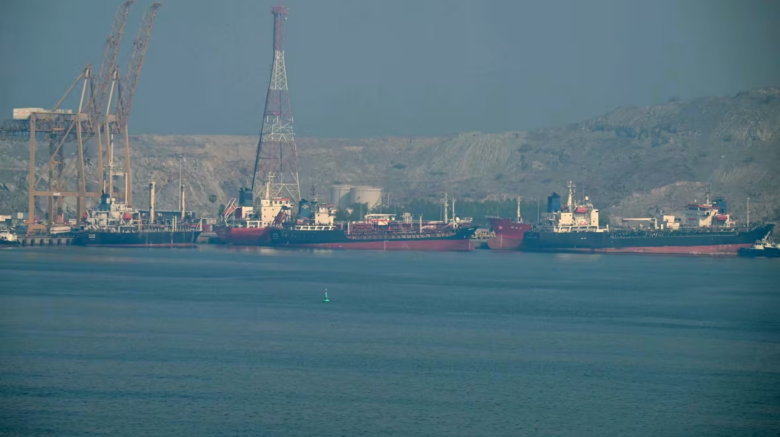
For the past few months, free movement has been limited in the Strait of Hormuz due to the Islamic Revolutionary Guard Corps (IRGC)’s decision to close the strait following Trump and Israel’s aggression against the regime. With energy prices soaring worldwide, inflation risks threatening food security, particularly in the global south.
Vital supply chains in a chokehold
Located at the crossroads of Iran, Oman and the United Arab Emirates, the Strait of Hormuz is a strategic passage that represents “a quarter of global seaborne oil trade and significant volumes of liquefied natural gas and fertilisers” according to the UN Trade and Development (UNCTAD). Yet, the Chief of Transport section at UNCTAD reported “a decline of more than 95 per cent” in traffic on March 23rd.
Indeed, the IRGC declared on February 29th its closure as a response to U.S.-Israel airstrikes which destroyed military sites, power plants, and killed the supreme leader, Ali Khamenei. Although his death brought hope for the end of dictatorship in Iran, Mojtaba Khamenei quickly succeeded his father as the new supreme leader on March 8th, maintaining both the closure of the Strait and a repressive regime against revolutionaries.
Despite a peace deal between the U.S and Iran being underway, the current ceasefire remains fragile with nearly 20,000 seafarers still stranded in the Persian Gulf as of April 22nd. In his statement on urgently releasing the ships, the Secretary General of the International Maritime Organisation (IMO) shed light on the conditions of the trapped workers: “constant stress of missiles overhead, the danger of falling debris striking in the ship, the need to ration supplies, and the difficulty of keeping his family informed about his situation.”
From Africa to Asia, the global south is hit first
The question of resources becomes critical in countries of the global south. With delays in the supply chain due to rerouting of the ships around the Cape of Good Hope, the cost of gas, oil and fertilizers is soaring. Chief Henrik Hansen from the World Food Programme (WFP) stated that “Sudan faces the most immediate impacts” of the crisis as the country heavily relies on supply chains from Asia and the Gulf region. Supply chains were already weak, but with challenges in passing through the Strait of Bab El Mandeb – between Yemen, Djibouti and Eritrea – on top of additional time needed to secure land routes to Sudan, emergency interventions risk being delayed, putting thousands of lives on a thin line.
Meanwhile, in Asia and the Pacific region, rice harvests are already happening in Sri Lanka and Bangladesh. This disruption in the supply of fertilizers makes Bangladesh “an extreme risk profile” according to FAO’s Secretary-General. Indeed, due to the shutdown of state-run fertilizer factories, domestic production of rice during the winter season was already disrupted, which raises concerns over food security in the country for the upcoming months.
Pakistan, Nepal and the Philippines face the same risk with an estimated 45,5 million people already being in need of humanitarian assistance according to UN News. With the overlapping of the crisis and pre-existing economic fragility, an additional of 9,1 million people in Asia could be pushed into acute food insecurity, according to the WFP.
Cushioning the crisis
In order to cushion those estimations, countries like Pakistan and Sri Lanka reduced the work and school week to four days, limited public events, and introduced fuel rationing to conserve energy supplies. Though efforts are being implemented, low-income households remain the most vulnerable with their purchasing power decreasing. WFP’s Head of Research, Takahiro Utsumi assessed “12,4 million people are already acutely food-insecure” in Myanmar. But due to the blockade and an already strained economy, even essential goods, like rice, became harder to find.
The Economic and Social Commission for Asia and the Pacific (UNESCAP) calls for a coordinated policy action with fiscal support and regional cooperation to back the initiatives. Short-term solutions involve subsidies for minimum consumption blocks of electricity or cooking gas, and targeted and temporary cash transfers to the most vulnerable households. While long-term solutions involve diversifying energy sources to strengthen resilience.
As a way to answer the call for cooperation, the UN established a dedicated Task Force gathering the Executive Director of the UN Office for Project Services (UNOPS), representatives from UNCTAD, IMO, and the International Chamber of Commerce (ICC). Under the leadership of Under-Secretary-General Jorge Moreira da Silva, this initiative aims to facilitate fertilizer trade, including the movement of related raw materials, to ensure orderly and reliable transit for humanitarian purposes.
While the timeline of the conflict only represents a disruption of a few months for some, “humanitarian supply chains are literal lifelines for millions of people already on the brink of hunger” stated Corinne Fleischer, WFP Director of Supply Chain. Agnès Callamard calls on the international community to draw the line: “there must be a durable and genuine ceasefire; this requires a full halt in armed hostilities by all parties, across all affected countries.”
References:
Middle East war: UN initiatives support mediation efforts, ‘lifesaving’ fertiliser shipments. (2026, March 30). UN News. https://news.un.org/en/story/2026/03/1167213
FAO: Protracted Strait of Hormuz crisis could turn into global agrifood catastrophe. (n.d.). Newsroom. https://www.fao.org/newsroom/detail/fao–protracted-strait-of-hormuz-crisis-could-turn-into-global-agrifood-catastrophe/en
Military escalation in Middle East could push more than 30 million people into poverty worldwide, UN Development Programme warns. (n.d.). UNDP. https://www.undp.org/press-releases/military-escalation-middle-east-could-push-more-30-million-people-poverty-worldwide-un-development-programme-warns
Dire fertiliser shortage a lurking threat due to Hormuz crisis. (2026, March 24). UN News. https://news.un.org/en/story/2026/03/1167182
Statement by IMO Secretary-General on the recent attacks on ships in the Middle East. (n.d.). https://www.imo.org/en/mediacentre/secretarygeneral/pages/imo-secretary-general-statement-attacks-on-ships-in-middle-east.aspx
Middle East crisis: WFP navigates turbulent waters to tackle hunger | World Food Programme. (2026, April 2). UN World Food Programme (WFP). https://www.wfp.org/stories/middle-east-crisis-wfp-navigates-turbulent-waters-fight-hunger
Strait of Hormuz crisis: FAO Director-General outlines risks, actions and policy responses. (n.d.). Newsroom. https://www.fao.org/newsroom/detail/strait-of-hormuz-crisis–fao-director-general-outlines-risks–actions-and-policy-responses/en
Despite ceasefire, Hormuz tensions continue to throttle supply chains worldwide. (2026, April 23). UN News. https://news.un.org/en/story/2026/04/1167365
WFP projects food insecurity could reach record levels as a result of Middle East escalation | World Food Programme. (2026, March 17). UN World Food Programme (WFP). https://www.wfp.org/news/wfp-projects-food-insecurity-could-reach-record-levels-result-middle-east-escalation
How the Middle East crisis is deepening hunger far beyond the front lines | World Food Programme. (2026, April 20). UN World Food Programme (WFP). https://www.wfp.org/stories/how-mideast-crisis-deepening-hunger-far-beyond-front-lines
Note to correspondents: On the strait of Hormuz. (2026, March 27). Secretary-General. https://www.un.org/sg/en/content/sg/notes-correspondents/2026-03-27/note-correspondents-the-strait-of-hormuz
Amnesty International. (2026, April 30). Middle East: World leaders must centre protection of civilians and agree an enduring and sustainable ceasefire. https://www.amnesty.org/en/latest/news/2026/04/middle-east-world-leaders-must-centre-protection-of-civilians-and-agree-an-enduring-and-sustainable-ceasefire/
Source image:
Stechyson, N. (2025, June 23). What is the Strait of Hormuz and what could happen to oil prices if Iran shuts it down? CBC. https://www.cbc.ca/news/world/iran-strait-hormuz-1.7568486