AUTHOR: Sara B. Gero
In January of 2026, the UN released a flagship report detailing that the world has entered the era of global water bankruptcy. This quickly made the headlines of newspapers around the globe. But, what does global water bankruptcy actually entail? How is it different from the water crisis that we have been in for decades? And, what is the path forward?
What is global water bankruptcy?
In many freshwater reserves, long-term water use has exceeded renewable inflows and safe depletion limits, meaning that we have used more water than nature can replace. As a result, rivers, lakes, underground water, wetlands, soils, and glaciers have been damaged so badly that full recovery may be impossible. The human and ecological consequences of this are already severe. Nearly ¾ of the world’s population lives in countries classified as either water-insecure or critically water-insecure. Today, around 2.2 billion people lack access to safe drinking water, 3.5 billion lack safely managed sanitation, and about 4 billion people experience severe water scarcity for at least one month a year. All of these are expected to increase as a consequence of the water bankruptcy.
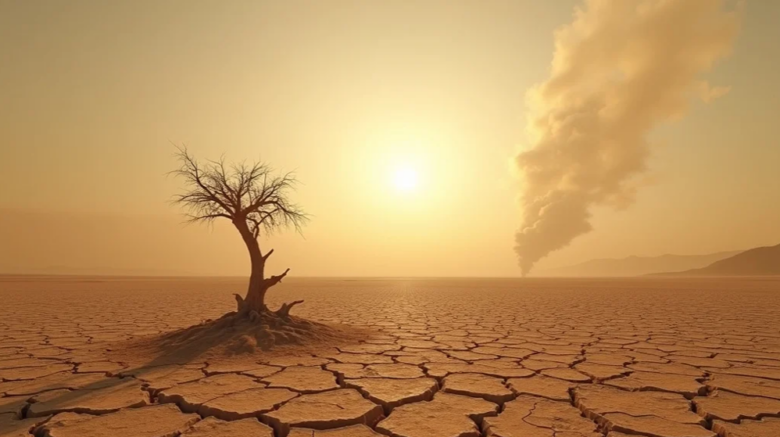
At the same time, the current ecological reality is also deeply concerning. A growing number of major rivers now fail to reach the sea or fall below environmental flow needs for significant parts of the year, including the Yellow River in Asia, on which hundreds of millions of people rely on for water. Wetlands have been destroyed at a continental scale. Over the last 50 years, the world has lost around 410 million hectares of natural wetlands, for comparison, the size of the European Union is around 420 million hectares. The loss of these ecosystem services is valued at over 5 trillion USD.
These are just some of the extreme realities that we now, in the age of global water bankruptcy, face. Some of the others include the depletion of groundwater, causing land areas to sink, including urban and densely populated areas where close to 2 billion people live overall. More than 170 million hectares of irrigated cropland are under high or very high water stress, which has the potential to drastically increase food insecurity by 2030. The truth is that the current governance is failing, and global agendas such as WASH (Water, Sanitation, and Hygiene) are insufficient to address the scale of the problem. It cannot manage the structural overshoot, the irreversibility and the rising risk of social instability and conflict caused by water bankruptcy.
How is water bankruptcy different from the water crisis of the past decades?
For decades, global science communities have warned of an escalating ”water crisis” and called for accelerated action over it. Those warnings were right, but they are not enough anymore. Crisis implies a temporary emergency followed by a return to normal through mitigation efforts, this no longer applies to what is happening in many parts of the world. In many regions, human-water systems are already in a post-crisis state of failure. Over decades, societies have withdrawn more water than climate and hydrology can provide, while the fraction of water that is safely usable has also declined due to pollution and salinization, for example.
In a bankruptcy state, some damages are physically irreparable on human time scales: compressed aquifers do not rebound, subsided deltas do not rise, extinct species do not return; others are technically reversible at costs so high, or over periods so long, that they are effectively irreversible. This is the essential difference between water bankruptcy and water stress, where high pressure still allows recovery, and water crisis, where an acute, time-bound shock can still be overcome.
The aforementioned problems related to the global water bankruptcy, including rivers that no longer reach the sea; aquifers pumped down until land subsides and salt intrudes, and cities repeatedly brought to the brink of complete water depletion, are not simply signs of stress or episodes of crisis. These are symptoms of systems with systemic issues, systems that have overspent their hydrological budget and eroded the natural capital that once made recovery plausible, with knock-on effects for food prices, employment, migration, and geopolitics.
What is the path forward for governments?
Managing water bankruptcy requires a shift from crisis management to bankruptcy management. The priority should no longer be to “get back to normal”, but to prevent further irreversible damage, and to adapt to our new normal through rebalancing rights and claims within degraded carrying capacities, transforming water-intensive sectors, and supporting just transitions for those most affected.
The UN report distinguishes 5 core principles that are particularly important for governing water-bankrupt systems:
1. Tell the truth about limits and losses: when governments insist that conditions are temporary, or promise to return to past levels of supply that are no longer feasible, they keep societies in maladaptive investments and deepen over-extraction.
2. Prioritize prevention of further irreversible damage: governments must place non-reversible thresholds at the center of planning. Protecting remaining wetlands and aquifers, preventing further land subsidence and saltwater intrusion, safeguarding key species and ecosystems, and maintaining cryospheric and soil functions where they still exist. The cryosphere encompasses all parts of the Earth’s surface where water is in solid form, including permafrost, glaciers and ice sheets. These should not be treated as optional co-benefits, instead, they must be high-priority objectives
3. Align claims and expectations with degraded carrying capacity: in many systems, the sum of legal rights, informal expectations, and development promises exceeds what the degraded system can supply. Closing this expectations-reality gap is not possible through marginal efficiency and infrastructure improvement alone. It requires structural changes, including but not limited to revising crop mixes and land use patterns, and reconsidering the size and location of cities and industries
4. Protect the vulnerable and share unavoidable losses fairly: water bankruptcy tends to hit those with the least political and economic power the hardest, including small holder farmers, informal urban residents, indigenous communities, women, girls, and children. Compensation, social protection, livelihood diversification and legal safeguards are essential.
5. Build institutions for continuous adaptation, not one-off fixes: institutions must be capable of learning and adaptation, with monitoring systems that track stocks and trends, and procedures that trigger adjustment when thresholds are approached.
Furthermore, the report highlights fundamental strategies to rebalancing water demand. These include identifying non-negotiable minimums, such as access to safe drinking water and access to essential health facilities, transforming agriculture, diversifying economies and decoupling growth and water use, which includes a shift away from irrigated monocultures and water-intensive extractive practices, for example. Urban and industrial development must also change by being re-scaled and re-located according to hydrological limits.
Conclusion
The world has entered a new era, and we must adapt to a new normal. Recognizing this new reality is certainly uncomfortable and difficult, but it is essential to replace false hope of a simple return to the old normal with a clear understanding of the situation and our choices moving forward. Governments, international organizations, and private citizens must all realize that the situation is already extreme, and we are at a critical juncture where our choices will define water-security for the next decades and centuries. Most of the responsibility is on the national governments, to adequately inform their citizens on the path forward and to adapt their states to the new reality, international organizations must aid them in this as well as in cooperating with each other. And, we, as private citizens, must also consider how much water we use, including artificial intelligence, whose data centres require significant water for cooling, and diets with high water footprints, particularly meat consumption.
Source(s):
Madani, K. (2026). Global water bankruptcy: Living beyond our hydrological means in the post-crisis era. United Nations University Institute for Water, Environment and Health. https://doi.org/10.53328/INR26KAM001
Un-Water, & Un-Water. (2026, January 21). UNU-INWEH report on ‘Global Water Bankruptcy’ | UN-Water. https://www.unwater.org/news/unu-inweh-report-global-water-bankruptcy
Source for the picture:
Grant, J. (2026, January 21). World enters era of ‘Global water bankruptcy’: UN report declares irreversible damage | Jamaica Sentinel. Jamaica Sentinel |. https://jamaicasentinel.com/global-water-bankruptcy/