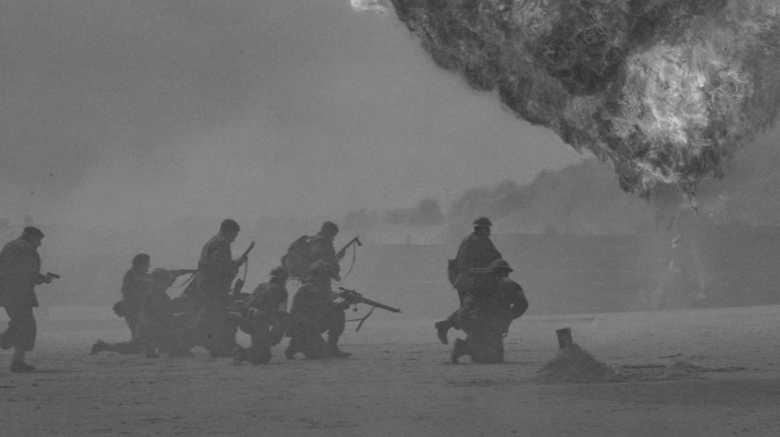
Source: Photo by Duncan Kidd / Unsplash
https://unsplash.com/photos/silhouette-of-soldiers-Cju-BkSkM1k
AUTHOR: Eleonore Dlugosz Donnen
“Mine action plays a critical role in places where peace is fragile, the humanitarian response urgent, and development precarious. It allows the UN and its partners to work in greater safety and enables ravaged communities to recover and rebuild.”
António Guterres, UN Secretary General
Few instruments of international law have succeeded in achieving such a broad consensus as the 1997 Treaty Banning Anti-Personnel Mines. More than 160 states have ratified this treaty, over 55 million stockpiled mines have been destroyed, and more than 30 countries have officially declared their territories free from the threat posed by anti-personnel mines. This is evidence of a collective determination to protect civilian populations from an unpredictable weapon which, beyond killing, also causes lasting mutilation and long-term trauma.
The United Nations has also taken up the cause by establishing the United Nations Mine Action Service (UNMAS) in 1998 to eliminate the threat posed by mines and explosive remnants of war. Whilst there have been many significant advances, the reality remains harsh and some countries remain contaminated. In 2024, 6,300 people fell victim to these mines. This is one of the highest annual figures recorded since 2020. Within the global picture, South-East Asia occupies a unique and painful position. Cambodia, Laos and Vietnam bear the indelible mark of a turbulent past of armed conflict, which has left terrible consequences buried underground for their populations.
“These weapons do not disappear when the fighting is over. They kill thousands each year and injure a great many more – often long after conflict ends. As conflicts multiply and military spending skyrockets, these dangers are deepening.”
António Guterres, UN Secretary General
This observation was made by the United Nations Secretary-General, who noted that despite the end of the conflict and the passing of time, the threat persists and must be addressed before measurable progress can be made. The aim will be to examine the case of South-East Asia through a study of several countries that are marked by a painful past and an underlying threat and demonstrate great resilience.
Cambodia
Cambodia bears the heavy burden of a history marked by widespread contamination with anti-personnel mines across its territory. The country has been scarred by a tragic accumulation of successive internal and regional wars spanning several decades, which ravaged the nation from the 1960s until 1998. The extent of this contamination remains difficult to determine due to the lack of reliable maps showing where the mines were laid, a situation compounded by the multitude of armed groups that occupied different territories. The north-western region near the Thai border is one of the areas with the highest concentration of anti-personnel mines laid during the Khmer Rouge era in the 1970s and the civil war. Since 1979, nearly 65,000 casualties, including around 20,000 deaths, have been attributed to mines and explosive remnants of war. These figures from the United Nations
Development Programme (UNDP) bear witness to the scale of the disaster, which nevertheless remains largely overlooked on the international agenda and in the common psyche. Mine clearance operations began in 1992 under the impetus of the United Nations Transitional Authority in Cambodia (UNTAC). By June 2021, the demining sector had cleared and returned nearly 2,221 square kilometres of contaminated land, destroying more than 1.1 million anti-personnel mines, 25,603 anti-tank mines and 2.9 million explosive remnants of war.
These encouraging results demonstrate the effectiveness of a robust institutional framework. In 2000, the Royal Government of Cambodia established, by royal decree, the autonomous Cambodian Mine Action and Victim Assistance Agency (CMAA), tasked with coordinating and supervising all efforts within the country, notably the ‘Clearing or Results’ project implemented since 2006 with the UNDP and several other international donors such as Australia, New Zealand and the Republic of Korea. Highlighting the need for numerous stakeholders to come to the aid of a country defending its territory, unity is strength and yields greater results. Over 15 years, ‘Clear for Results’ has enabled the clearance of a further 263 square kilometres of land, on which 71,311 anti-personnel mines have been destroyed. This encouraging progress must bring hope, as there are still 2,098 km² of contaminated land in Cambodia, 806 km² of which are contaminated by anti-personnel mines. While the trend appears encouraging, with the number of victims falling from 4,320 in 1996 to just 65 in 2020, the road to a Cambodia free from this threat remains long and requires financial and technical commitment from the international community.
Laos
Whilst Cambodia is a case in point of contamination spanning several decades, Laos, a landlocked country in South-East Asia with a population of nearly six million, suffered intensive bombing between 1964 and 1973, with more than 580,000 bombing sorties carried out during the nine years of conflict, dropping over two million tonnes of munitions on the territory. Among these munitions, more than 270 million submunitions known as ‘bombies’ were scattered across the country; approximately 80 million of these never exploded, lying in rice fields, schools, rivers, etc. Today, ten out of seventeen provinces remain severely contaminated by the presence of these devices. Between 1964 and 2020, there have been 50,000 victims, most of them civilians.
Agricultural land is therefore itself affected, and infrastructure projects are delayed by the cost of decontaminating an area. As the UNDP notes, the pressure of dwindling food supplies and low incomes ultimately forces people to farm contaminated land, thereby exposing themselves to danger.
One afternoon in January 2008, nine children went to play in the fields close to their village in Savannakhet Province. Four of the boys were hunting for crabs, using a shovel. They didn’t know that a BLU-26 bombie was hidden beneath the ground. When the shovel hit the bombie it exploded, and all four boys were killed.
“My oldest child, my 12 year old boy, was killed by the explosion. Two of my other children were also injured. They couldn’t have known the bombie was there, hiding in the ground.”
Mrs Keolamon, from the province of Savannakhet in Laos
“I found the bombie while clearing my land to grow food. I marked it and told the village chief, who reported it to UXO Lao. I am very happy UXO Lao can come to clear the bombie from my land, (…) hope all our land will be cleared one day so my son will be completely safe from bombies.”
Mr.Por
“When I was 15 years old my mother was working in our rice field and her hoe hit a bombie. The explosion severely hurt her leg and she had to have it amputated. I am the oldest child in my family. After my mother’s accident, life became very hard for us all. We became very poor. There was no one to help us. My mother continues to work, but now in the house looking after my children when I work. She has not been able to work in the rice fields ever since the accident. What happened to her is why I work with UXO Lao.”
Ms Ngai, a UXO Lao clearance team member since 1998.
In response to this situation, the international response has gradually taken shape through UXO Lao, a demining organisation established in 1996 with the support of the UNDP and UNICEF, which operates in the most affected provinces. In 2023, according to data from the national regulatory authority for the UXO sector and mine action, 3,262 hectares were cleared, 40,448 items were destroyed, and more than 3,000 victims received medical care and reintegration support.
These advances, highlighted during a meeting in 2023 between the UNDP and the Lao Ministry of Foreign Affairs, demonstrated institutional dynamics that are strengthening year on year. Laos has even made the clearance of UXO a priority, recognising that demining is a prerequisite for its economic development. In 2020, the number of victims fell to fewer than 60, compared with several hundred in the early 2000s, demonstrating real progress.
Vietnam
Vietnam, for its part, serves as an example of a country struggling to free itself from the legacy of conflict: fifty years after the end of the Vietnam War, nearly a fifth of the country’s territory remains contaminated by landmines as a result of the devastation wrought between 1960 and 1975. This persistent contamination has claimed some 105,000 victims between 1979 and 2018 – a catastrophic human toll that remains an emergency all too often sidelined in favour of more recent and visible crises.
Despite its troubled past, Vietnam’s recent figures demonstrate remarkable progress: in 2019, only one casualty was officially recorded for the whole year. This figure illustrates the considerable progress made thanks to decades of mine clearance efforts and public awareness campaigns. These advances are the result of a national policy embodied in the 2010–2025 National Mine Action Programme, known as Programme 504, which receives support from the United Nations and partners such as South Korea with its -Vietnam Mine Action project, implemented between 2018 and 2021 with a substantial budget of $29.5 million co-financed by the Republic of Korea and the Vietnamese government. 16,880 hectares were surveyed, and 9,086 hectares were effectively cleared. Beyond technical expertise, there is the human aspect, and more specifically, the victims; here too, the programme has made a difference, with 1,034 survivors receiving a medical assessment for prosthetic fittings, 170 of whom received rehabilitation services.
Through the national implementation of Programme 504, Vietnam has demonstrated that a drastic reduction in casualties and decontamination is possible, and stands as a case that offers hope that the soil can be decontaminated and, in fact, that the damage to Vietnam’s soil caused by conflict can be remedied.
“I call on all Member States to join and adhere to the relevant instruments – including the Anti-Personnel Mine Ban Convention – and urge those that have withdrawn to rejoin. Failing to preserve these vital instruments will only weaken civilian protections and add to the 100 million innocent lives already in peril.”
António Guterres, UN Secretary General
This solemn appeal by the Secretary-General is addressed to the entire international community, but it resonates particularly strongly with this region of South-East Asia, which has been especially scarred by these conflicts and the threats beneath its surface. Humanitarian action, if carried out with consistency and rigour, can transform the reality faced by the populations most vulnerable to these threats. The war that has been buried beneath the soil of South-East Asia cannot wait; we must be able to respond with decisive action. This is the minimum requirement for peace and post-conflict resilience.
Sources
Amnesty International. (2004). [Document title based on index ASA 26/001/2004]. https://www.amnesty.org/fr/wp-content/uploads/2021/09/asa260012004en.pdf
United Nations. (2023, July 21). Mine action cannot wait. United Nations Mine Action Service. https://www.un.org/en/exhibits/exhibit/mine-action-cannot-wait
United Nations Department of Political and Peacebuilding Affairs. (2024). Why mine action matters. https://www.un.org/en/peaceandsecurity/why-mine-action-matters
United Nations Development Programme. (2009). Hazardous ground: Cluster munitions and UXO in the Lao PDR. https://files.acquia.undp.org/public/migration/la/UNDP_LA_Hazardous-Ground.pdf
United Nations Development Programme. (2020–2025). Clearing for Results Phase IV: Mine action for human development. Cambodia. https://www.undp.org/cambodia/projects/clearing-result-phase-iv-mine-action-human-development
United Nations Development Programme. (2023, December 7). Stakeholders of the UXO/mine action sector in Lao PDR gathered to mark another milestone in 2023. https://www.undp.org/laopdr/press-releases/stakeholders-uxo/mine-action-sector-lao-pdr-gathered-mark-an other-milestone-2023
United Nations Development Programme. (2018, March 9). Viet Nam: Mine action project launched with support from Korea. https://www.undp.org/vietnam/projects/korea-vietnam-mine-action-project