AUTHOR: Kenza S.
Two years after the start of the war in Sudan, it can definitely be said that the international community has failed to stop what is described as one of the worst humanitarian crises ever in the world. Famine and sexual abuse against women show how civilians are the ones who suffer the most in the middle of this conflict.
Background
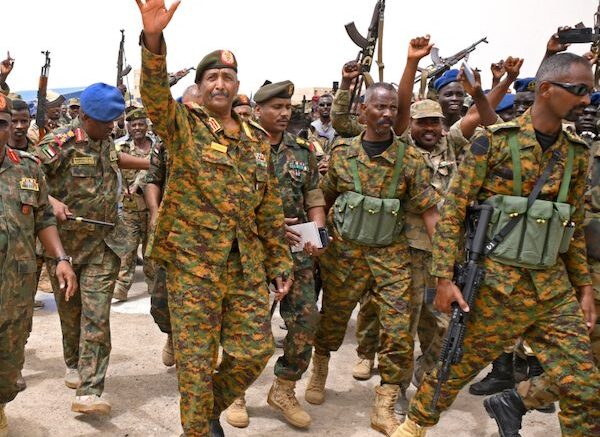
The people of Sudan have been witnessing chaos, instability, and serious human rights violations for so long. The conflict officially started in 2023, yet the Sudanese people have seen their rights taken away from them since day one. Their living conditions particularly worsened after the October 2021 coup d’etat undertaken by the Sudanese Armed Forces (SAF) and the paramilitary Rapid Support Forces (RSF). Peaceful protests against the military takeover followed, but they were brutally and unlawfully repressed.
However, tensions between the SAF and RSF arose over security force reform during the negotiations for a new transitional government, ultimately escalating into a nationwide conflict in April 2023. Initially, the fighting was concentrated in the area around the capital Khartoum, but it immediately escalated across the whole country. Since then, Sudanese people have been facing an unprecedented humanitarian and displacement crisis. With tens of thousands of people killed, many more injured, over 8,6 million internally displaced, and over 2 million others living in dire conditions as refugees in neighboring countries, inaction prevails. What the international community is truly doing is turning a blind eye to the human rights violations in Sudan.
Shameful Inaction of the International Community
It is very disappointing how the international community is handling the situation. Just consider that it took almost a year for the UN Security Council to adopt a resolution calling for an immediate cessation of the war and unhindered humanitarian access. The US government recently decided to interrupt foreign aid, while the EU only formally called for the warring parties to end the enduring violence in the country. This clearly shows that diplomatic efforts have mostly been a failure in changing the status quo.
On the other hand, one expects countries and companies all over the world to be outraged in front of what the people of Sudan are experiencing. Yet, many of these are currently financing this war by sending weapon supplies to both the SAF and the RSF military forces and other smaller groups. Amnesty reports that, for example, Russia, China, Turkey, the United Arab Emirates (UAE), and corporate actors have been consistently transferring conventional arms to Sudan. This constitutes a clear violation of international law, as both states and companies have the responsibility to respect human rights, especially if they are aware that the said weapons will likely be used to commit war crimes. Unfortunately, this blatant disregard for international law and fundamental human rights does not come without consequences. Who, then, pays for the international community’s inaction? Innocent people, mothers, fathers, and children.
The Consequences of Inaction
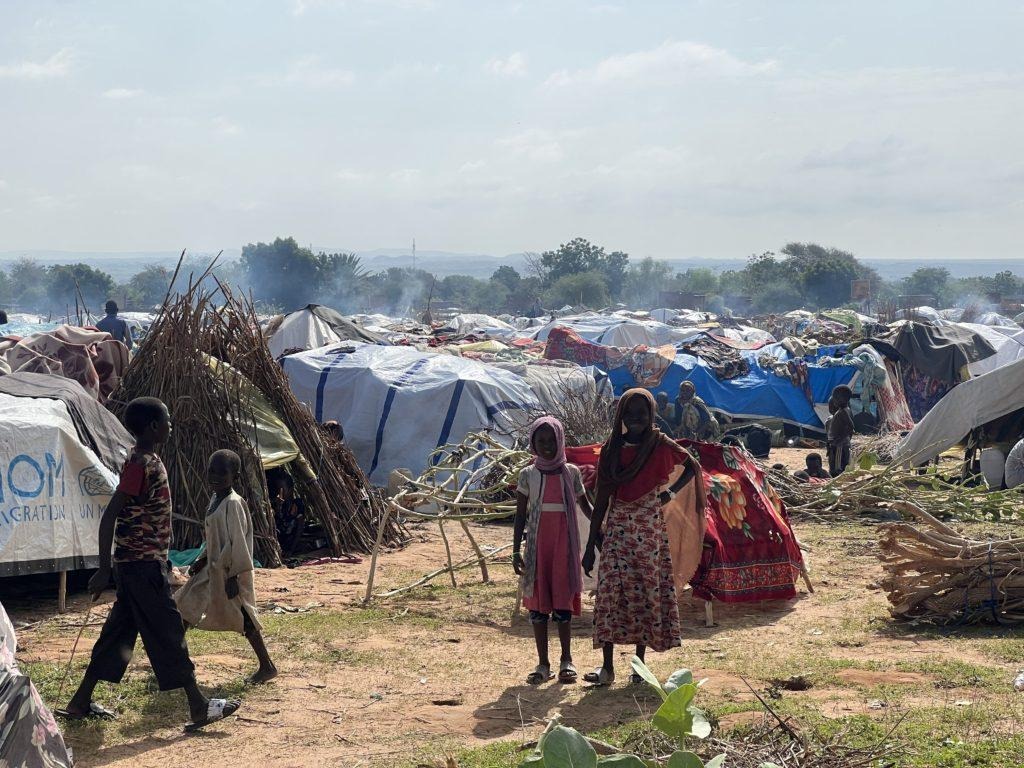
The lack of timely intervention by the international community has exacerbated Sudan’s crisis, with widespread sexual violence and a famine threatening millions. Both the RSF and Sudanese Armed Forces have committed serious violations of international law, some of which amount to gender-based violence. Sexual abuse is being used to terrorize and subjugate civilians, as a tool to exert control. Oftentimes, these soldiers would brutally rape women in front of their families to inflict fear on the community. As a result, those countries and companies that are still supplying these military forces with weapons share the same shame and responsibility as RSF and SAF in committing such heinous acts of violence. Meanwhile, famine is at the forefront. According to the UN, Sudan faces a steady increase in food insecurity levels. Nearly 11.7 million people face acute food insecurity, and most of them are classified as “emergency” situation. However, the UN Food and Agriculture Organization specifies that after the Russian aggression in Ukraine, the living conditions of the Sudanese have further deteriorated because of their reliance on wheat imports from Russia and Ukraine.
Considering all of the above, we are left with only hope. Hope that the global community will not continue to neglect Sudan and its people. Hope that governments, organizations, companies, and individuals will come together to stop the flow of weapons and provide humanitarian aid. Hope that, eventually, perpetrators will be held accountable for their actions.
Sources:
https://www.amnesty.org/en/documents/afr54/9201/2025/en/